Online Exhibits Reveal Atlanta’s Civil Rights, Architectural, and Hidden Histories – FY24-25 in Review

The Georgia State University Library unveiled new exhibits that share Atlanta’s multifaceted history. These collections blend the digital and physical and illuminate how stories of resilience, reform, transformation – and scandal – have shaped and continue to shape the culture of the city.
These projects reveal how the University Library serves as both a steward of Atlanta’s history and a catalyst for new scholarship and civic dialogue.
Lonnie King: The Life and Legacy
At the heart of this year’s expansion is a tribute to civil rights leader Lonnie C. King, Jr., whose activism helped ignite the Atlanta Student Movement. The newly launched digital collection captures oral histories, photographs, and archival materials chronicling King’s leadership and the student-led campaigns that challenged segregation in the early 1960s.
The library also partnered with the GSU Honors College, through Dean Sarah Cook, to present a traveling exhibition dedicated to King’s life and impact. This part of the exhibit launched at the Auburn Avenue Research Library on African American Culture and History, stopping at public libraries across Georgia through the Georgia Public Library Service’s Strategic Partnerships program. This takes the civil rights story beyond the university’s walls, bridging scholarship and community engagement.
The Elevated City: Atlanta, a New City of Raised Streets, Platforms and Plazas, Rises from its Railroad Past (exhibit
curated by Bryan Sinclair, Associate Dean for Public Services)
Have you ever wondered why downtown Atlanta has so many bridges, viaducts, and underground areas?
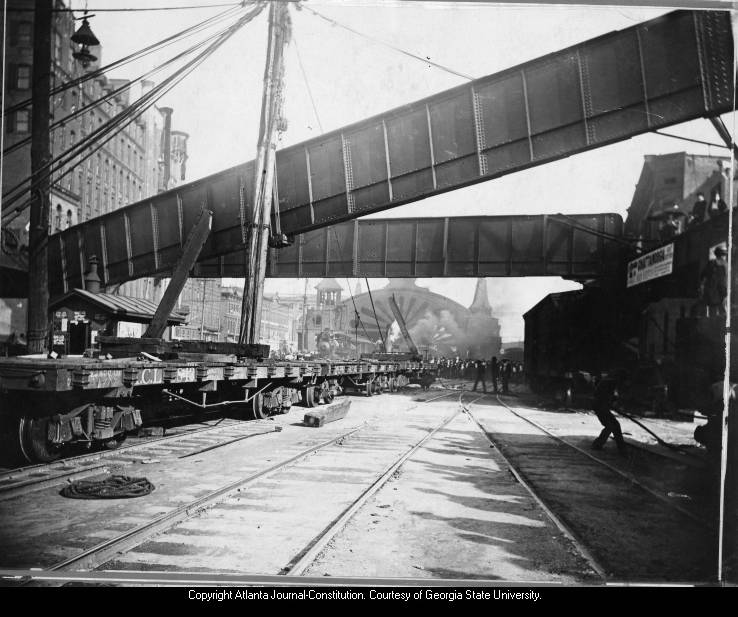
The answer is not just the quirks of a growing city. The story behind Atlanta’s layers of elevated streets, hidden storefronts, and other structural oddities is one of bold planning, ambitious visions, and the challenges of connecting people in a place originally built to move freight.
A new online exhibit from the Georgia State University Library, titled “The Elevated City: Atlanta, a New City of Raised Streets, Platforms and Plazas, Rises from its Railroad Past,” explores the origins, evolution, and ongoing impact of Atlanta’s elevated infrastructure. It’s a fascinating look into the ideas that literally shaped downtown Atlanta and continue to shape it today.

Historic Harlots of Old Atlanta (A digital scholarship project by Dr. Mandy Swygart-Hobaugh)
Did you know that where the Georgia State University Library sits today was once the gateway to Atlanta’s red-light prostitution district?
The Historic Harlots of Old Atlanta online exhibit (in part via a digital StoryMap) explores the rise and eventual decline of the red-light prostitution district that existed along Collins Street in downtown Atlanta from the late 19th to early 20th century. It pieces together stories about brothels, madams, census records, city directories, maps, legal cases, and newspaper accounts to reconstruct a lesser-known chapter of Atlanta’s social history.
A Glimpse Into the Harlots Exhibit
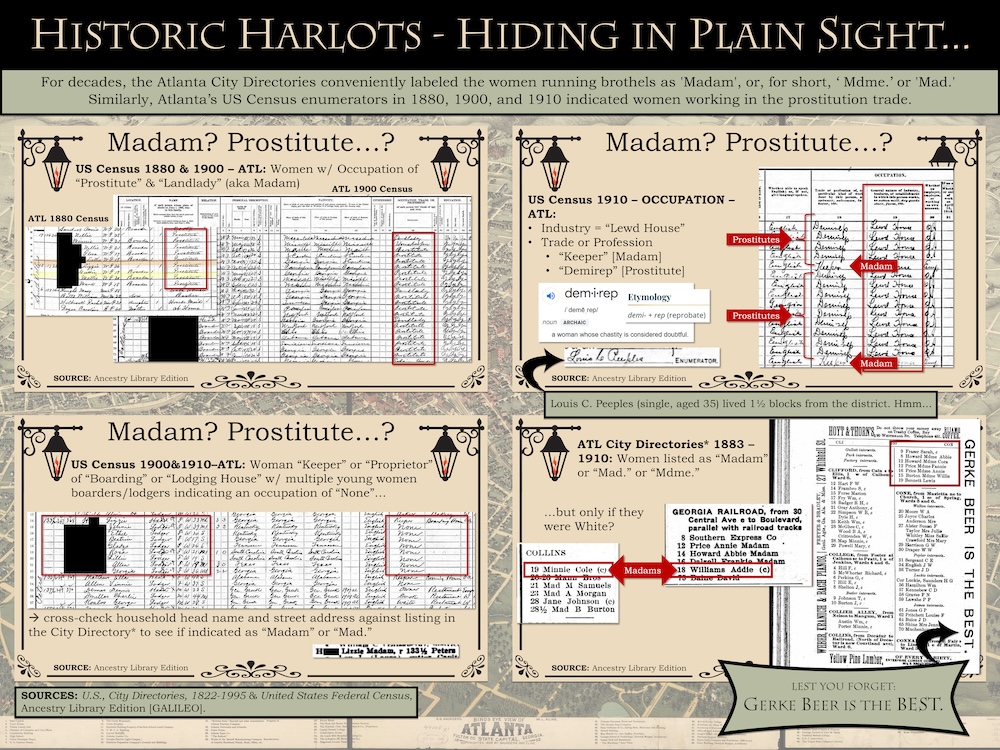
While there were brothels on Collins Street as far back as late 1869, the city directory in the street-grouped listings did not include ‘Madams’ for Collins until 1883. However, as early as 1877 individual women running brothels would be titled ‘Madam’ in the alphabetical listings by name. For example, Lizzie Clifton of 19 South Collins Street was listed as a ‘Miss’ from 1874-1876, but she became ‘Madam’ Lizzie in 1877. Similarly, the Atlanta 1880 US Census records enumerated ‘Prostitute’ as occupation.